“ON THE ROAD” WITH KEITH MOTT.
Looking back at London & South East Classic Club winners (Part 28).
L&SECC convoying and race points.
On one cold winter’s night in the mid 1990’s my phone rang, and it was my late friend, John Tyerman, who at the time was the President of the London & South East Classic Club. After a few minutes ‘chewing the fat’ about the sport in general, Johnny asked me if I fancied joining the Classic’s convoying set up and assisting Doug Went, who at that time I considered to be one of the best convoyers in the country. Although it was a job I had in the back of my mind, that I would like to have a go at, I had to think about it long and hard, because at that time I was suffering badly with Pigeon Fancier’s Lung, and pigeon convoying was not the obvious thing to do. I decided that with a bit of common sense, using a mask and coat, and with all the feeding and watering being carried out on the outside of the Classic’s lorry, I should get away with it, and if it did affect me badly I could resign at the end of the season.
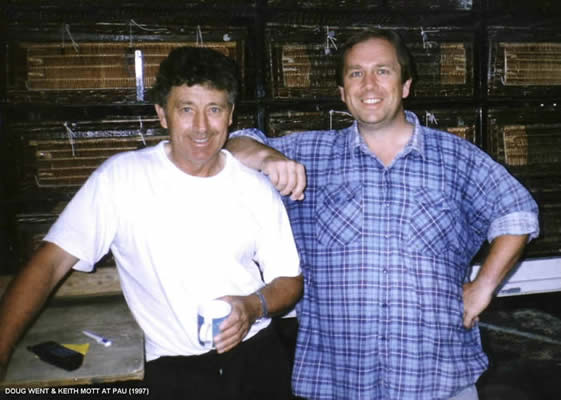
I first started when Doug Went and I convoyed the first Classic race of the 1997 season from Alencon, which had a record entry at that time of nearly 2,400 birds. Doug Went was one of the greats of convoying racing pigeons, with many years’ experience on the South and North roads and I must say, working with him for 18 months taught me a lot about being on the road with the pigeons. I took over as chief convoyer for the young bird Guernsey Classics in 1998 and I think the best liberation site we visited then was Bordeaux. It is very spacious and has full facilities for the pigeons and convoyers. This site is the main lorry driver’s stopover car park in Bordeaux and has a trucker’s hotel and petrol station, so it’s easy to water the birds and for the convoyers to get a meal and shower. This site is very near to a river and, like Pau, is prone to early morning mist.
I must say that in my time as a convoyer, I’ve never seen a perfect pigeon transporter or been to a perfect liberation site. We don’t live in a perfect world and we can always find something to criticize! I personally like the old-fashioned baskets, the like of which we used in the L&SECC for many years and were used by Catterells Pigeon Transport of Blackpool who served our sport so well for many years, before packing up about ten years ago. When Catterells ceased to trade they sold off their vehicles and the L&SECC purchased one of them, fully kitted out with wicker baskets. But time moves on and the baskets are now thought to be out of date! I was well aquatinted with the new transporter, as it was the 7.5 lorry that Gary Haslem and I used when Catterells transported the London Classic’s birds for a few seasons. In those days, Peter Coles was our hard-working secretary and my good friend, Steve Appleby, was my race advisor, and they were two of the best at their pigeon job in the sport. When you are in France with the pigeons it’s nice to know you have a good team behind you at the home end!
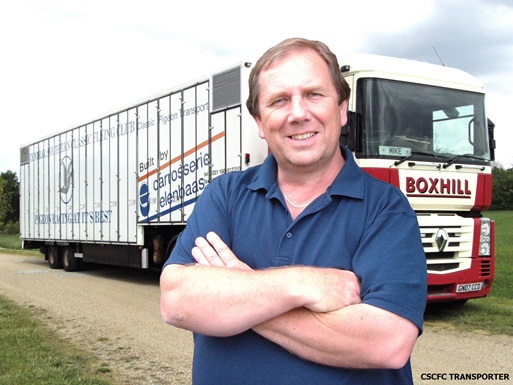
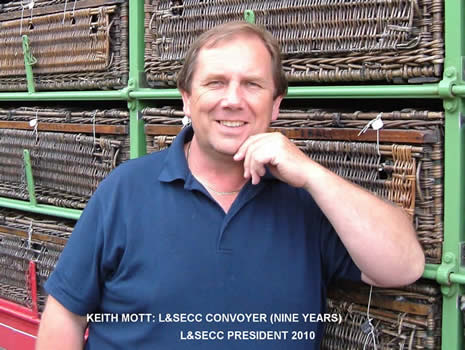
I loved convoying the pigeons through France to places like Bordeaux, Pau and Tarbes, but it is very hard work, and is a young man’s game! I retired from convoying for the L&SECC at the end of the end of the 2008 season, as I thought at 58 years of age I was getting to old for the pressure and sleeping rough in Lorries. I had no intention of ever doing ‘big time’ convoying again, but the Central Southern Classic Flying Club chief convoyers job was offered to me at the end of 2009, which involved no driving and the prospect of the luxury of the use of one of the premier transporters in the country at that time. I have convoyed South and North Road inland, but the main enjoyment for me was convoying the pigeons to France and it gave me a great buzz to produce good Classic racing from over the English Channel. It must be the ‘gipsy’ in me that made me except the CSCFC job in the 2010 season, which gave me the opportunity to visit some new liberation sites in France, including, Messac, Carentan and Bergerac.
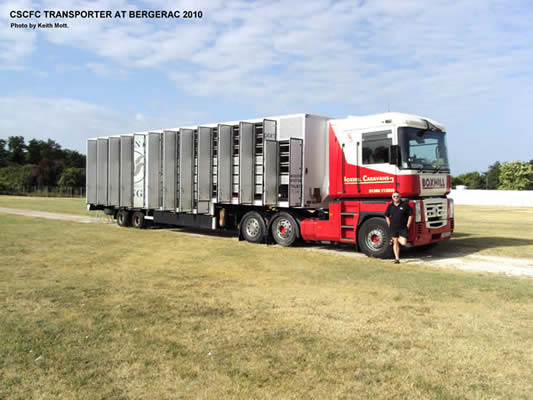
The Classic’s transporter was a pleasure to work with that season and I know the classic members were proud of their magnificent vehicle. Having used the CSCFC transporter for the 2010 race season, I think it was a first-class bit of kit, with the most outstanding feature being the watering system. The lorry was self-levelling and the birds drank out of nice plastic troughs that run the length of the centre isle of the trailer. I’m told the transporter had never run out of water, which I can quite believe, as the two tanks were huge. The trailer was fully air conditioned, but I did like to have the doors open as much as possible, so the inmates got as much natural air and light as I can give them. That is why you will read in my convoyer’ s reports that I got up very early in the mornings while on the road, so I could open up the trailer doors and the birds could see it get naturally light. I think this is very important! The CSCFC aluminium crates were designed to carry 30 birds and these were the very latest up to date in pigeon transporter design.
The star of my last season convoying was the Central Southern Classic Flying Club secretary; Clare Norman and I can’t give her enough praise! Clare and her pigeon partner husband, Martin, are two of the sport’s great workers. Clare Norman is probably the best pigeon club secretary I have known in my time in the sport and I’m proud to call her a friend!
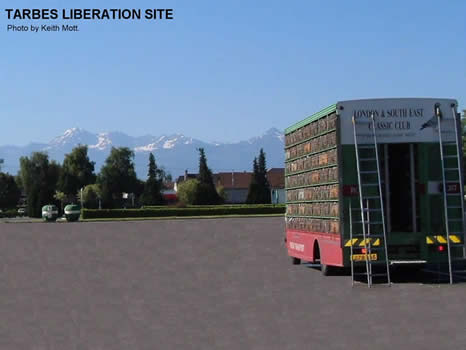
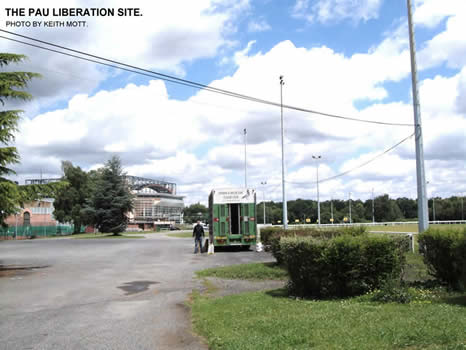
I had eight very enjoyable years as chief convoyer for the London & South East Classic Club and one with the Central Southern Classic Flying Club, visiting all the premier liberation sites on the continent, including 15 times to Guernsey with the young birds, but my favourite trips were to Pau and Tarbes. I visited Pau six times and Tarbes twice, and made my first trip convoying to the south of France when Doug Went and I took the L&SECC birds to Pau for the longest old bird race in my first season. Doug had a very bad opinion of the site at that time and I must say on my first visit I was shocked how bad this famous liberation site was. I came back and wrote how bad it was at the Camping Municipal and even with back up photographs and video, no one seemed to take any notice or be bothered. I had a good feeling about the Tarbes site, with the excellent results achieved by the National Flying Club out of there and Geoff Allan, the then NFC convoyer, had always said he likes the site very much. We, the London & South East Classic Club committee, gave Tarbes a try on my recommendation that the Pau site was a very poor liberation site and it proved to be a good move, as it was one of the best sites in France that I had visited. The liberation site is the very big car park of Geant Casino Super Market in Laldbere, Tarbes and it is quiet there, being mostly empty as it is the overflow parking at the rear of the complex.
The liberation area is vast, with a few lights stanches in it, but they are not too close to the transporters and do not impede the safe release of the pigeons. The site has the supermarket, toilets for the convoyers, a limited water supply and no shower facilities. One of the best sites in France, I think! Tarbes is a lot closer to the Pyrenees Mountains than Pau and with the wonderful clear condition, the snow-covered peaks made a brilliant back drop to the liberation site. That first trip to Tarbes was my seventh trip to the South of France with the L&SECC pigeons and I had only seen the Pyrenees Mountains once before, as they are normal clouded out and this was about eleven years before, on a trip to Pau with Doug Went. I was very impressed with liberation site at Messac and I think it is fair to say it is one of the best sites I’ve visited in France.
The birds are liberated at the top end of the picturesque marina, on a raised tarmac area which is site between the water and open fields. The pigeons have a perfect fly out on their liberation, with no obstacles to hamper them at all and the site is very quiet, with only the odd person walking their dog passing the transporter. On our arrival on site we were given a code number to the lock of the Shower / WC block and I must say this facility was spotlessly clean. The liberation site at Messac is brilliant and is one that I strongly recommend!
The London & South East Classic Club came out of Nantes and flew the Yearling Derby from Tours for the first time in the 2000 season. The Nantes site was taken off the R.P.R.A. list and that was a good site. The original liberation site at Tours looked like a massive military parade ground, with no obstructions, but when we arrived there the first time in 2000, we were turned away. The manager of the site spoke good English and told me that the area normally used for pigeon liberations was being used for a special exhibition and the liberations were to take place at the back of the parks site, between the lakes. I was not happy with the new arrangement as the yearlings seemed frightened on liberation, having been forced to fly straight out of the transporter over the vast area of water, having been liberated on the road between the two lakes.
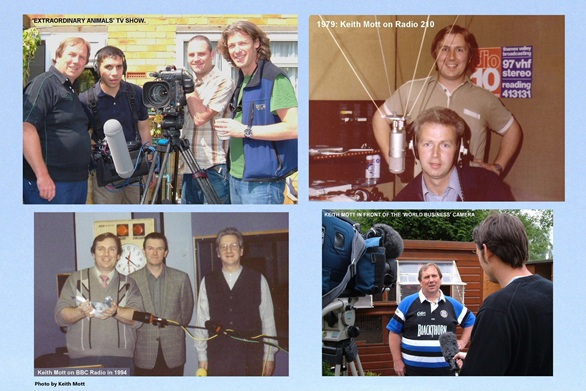
After that first time on other visits to Tours I parked the transporter across the road and the birds flew out along the road on liberation. The new arrangement, with the liberations on the road between the lakes was made permanent. Tours is a lot more central in France than Nantes, which is on the west coast and the London fanciers had a fairer race out of Tours. In the 2000 season we witnessed a brilliant spectacle, when the Dutch Southern Combine liberated 30,000 birds at Tours whilst we were there. I saw some big pigeon liberations in France, but I think that was my biggest. There were seven artic transporters and I filmed the massive liberation, with the footage being used on several TV programs, including BBC ‘Inside Out’. We arrived at the Tours liberation site and later in the afternoon the seven Dutch transporters parked up with their 30,000 birds on board, looking for an early morning toss next day, with their membership flying well over 450 miles. The Lorries were part of a fleet of the latest continental style transporters and were a similar style to the Central South Classic Flying Club transporter but were furnished with the International type plastic crates.
I noticed they were feeding 100% maize! I didn’t really agree with this feeding for pigeons in transit, as some birds don’t like maize and I think a general feeding like ‘Iris’ mixture should be used to give every bird a chance to feed properly in the lorry. My good long-distance blue chequer hen, ‘Foxwarren Complete’, never ait maize, so if she had been in that Dutch convoy, she would not have feed properly and been broken down in the basket before liberation. Most years when we went to Tours the big Belgian Inter Provincial convoy was there and I enjoyed meeting up with the chief convoyer, Erik Moppe, who had been doing the job for over 40 years.
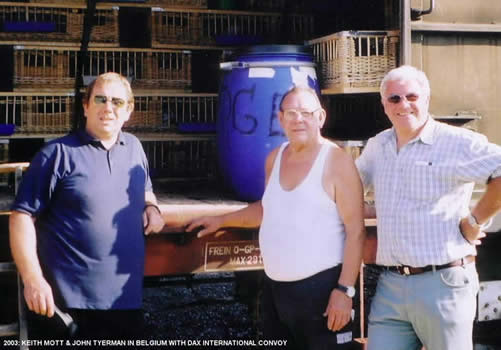
The 2003 Dax International marked the start of a new era in British pigeon racing, when two English fanciers were declared 1st and 2nd open International winners. The British contingent was very strong with the National Flying Club entering a very healthy 739 birds and its sister club, the British International Championship Club, sending a record birdage of 450 birds. John Tyerman and I convoyed the N.F.C. birds to Belgium to meet up with the International train, which carried the record 19,400 birds to Dax. Colin Bates, the N.F.C. convoyer travelled in the carriage with the British pigeons and only six game pigeons were recorded on the day of liberation in Britain and the first two were clocked by fanciers in the West Country.
John Tyerman and I have been good friends for many years, and we have been through several pigeon campaigns together, including serving on the NFC and L&SECC committees and convoying pigeons together. We roomed together when we travelled to the midlands for the National Flying Club committee meetings and in 2003, we convoyed the International birds to the waiting train in Belgium, when Brian Sheppard of Trowbridge won the race with his wonderful blue chequer cock, Champion ‘Legend’. When the members of the NFC sent their birds to their first International, no one really knew what an outstanding success it would be, and that British racing history was in the making.
That Dax International marked the start of a new era in British long-distance pigeon racing and John and I were very proud to be a part of it. John was a founder member of the London & South East Classic Club and in the early days of the club, he was one of the main workers in making it a success, including convoying the Classic birds out to France on a lorry. He was a great committee worker for the L&SECC for many years until he moved to Bracklesham Bay and was the Classic’s President for three years. He was on the NFC committee for nine years and is currently president of the BICC. Johnny was the man who got me started as a racing pigeon convoyer.
I think convoying racing pigeons, whether it is for a big Classic or small club race is the most responsible and demanding job in the sport! The only advice I can give to any youngsters who have dreams of becoming a racing pigeon convoyer, is when you are away with the pigeons in France be your own man, with your utmost priority being the bird’s welfare and producing the best race possible, with the situation you are presented with that weekend. Do not be influenced by outside voices or follow club rules if you think it will be detrimental to the welfare of the pigeons in your charge. Your paramount priority when convoying is the welfare of the birds!
I hope my readers have enjoyed this little in site into my time as a Classic convoyer. I had the great pleasure of work with some of the all-time greats in the field, including Peter Wilcox, Johnny Goodwin, Phil Fishlock and of course my good friend, Doug Went. This is the 28th and last article in my ‘L&SECC Winners’ series, and I hope my readers have enjoyed our look back at this great club’s history. I can be contacted with any pigeon ‘banter’ on telephone number: 01372 463480 or email