THE ART OF BREEDING, CONDITIONING & RACING PIGEONS AT THE EXTREME DISTANCE - Part 6
by Gareth Watkins
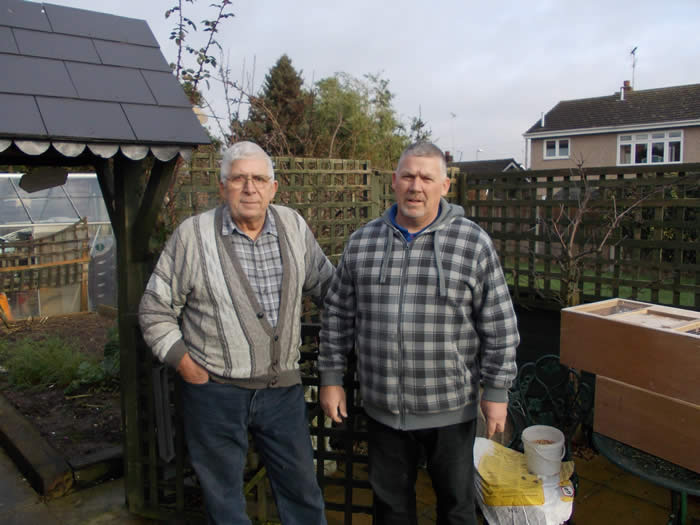
In this article I intend to outline the methods and pigeons of two more top class long distance fanciers. The first partnership to be featured needs no introduction, as they have won out of turn at every loft location to which they have raced. The Patrick Brothers, Steven and Philip have never been afraid of a challenge – in fact they actively seek new challenges and have over a number of years relocated to areas where the competition is “red hot”, no more so than in their latest, I won’t say final, move to Belgium.
PATRICK BROTHERS
The Patrick Brothers, Steven and Philip, started their pigeon racing careers in Berkshire. During their time there they set the local fancy alight racing their small team of mainly Busschaert widowhood cocks. This success was achieved at club, Federation, Combine and National level in races from 50 – 500 miles. However, after a number of years of this success in sprint / middle distance racing the brothers decided to have a go at true long distance National racing and so a move was planned to the West Midlands county of Shropshire. The highly successful family of Busschaerts was sold and the hunt was on for some out and out long distance marathon racers.
So it was that the new family of long distance pigeons was first created in 1988 with a base of just 5 Pigeons purchased from Martha van Geel, Netherlands, prior to her record breaking sale in 1989. Despite having invested a small fortune in these five Jan Aardens they were, once settled to their new loft, allowed their freedom and put into training with a number of tosses out to 50 miles. Once this training regime was completed to Steve’s satisfaction he was quite content to place them in the stock loft as they had clearly demonstrated their exceptional homing ability – a trait that the brothers insist on their pigeons having in abundance. The very best of the Van der Wegen bloodlines were also added and these of course contain the base of Jan Aarden Eventually a family of pigeons evolved which won consistently at Federation, Combine and National level. However, due to a chronic raptor problem the brothers after only a few years in Shropshire, were forced once more to move – this time to Somerset in the West of England. During the last two years racing in Shropshire the pigeons never went out of the loft for free flights. The only exercise they had was a 30 mile training flight each day. They were taken by car to fly against the wind in any direction, and then locked up for the remainder of the day. The brothers remained at the top at racing in Shropshire, never being beaten in the longest Federation race of 500 miles, many times clocking the only pigeons on day of liberation. The move to Somerset took place in the June of1996.
In August that year a round of late-bred pigeons were reared and these, along with the young birds bred in 1997, were to become the start of the new West Country family, the base of which was laid down in 1989.
The birds started to win from the word go. The young bird team won out of turn to such an extent that the brothers finished their first season as Club Champions. Following this initial success in their first half season of racing in Somerset, no further Club racing took place, Steve and Philip’s only interest was in racing from France with the NFC, BBC and the CSCFC. Although the birds were not raced weekly in a local club, they were however trained privately to 50 miles and then jumped over the Channel into France for their first taste of the race basket. This system was also applied to the young bird team which never saw another pigeon except for their loft mates, until their first race over the Channel. Despite what many thought this system proved extremely successful as losses were very few.
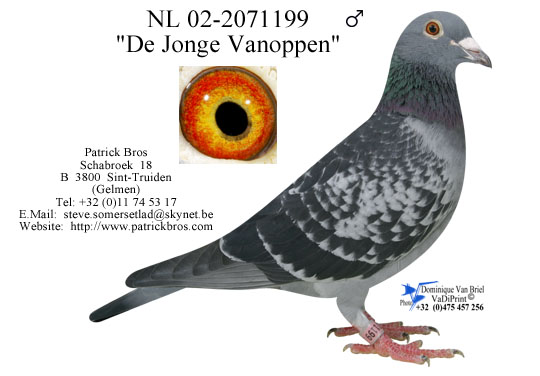
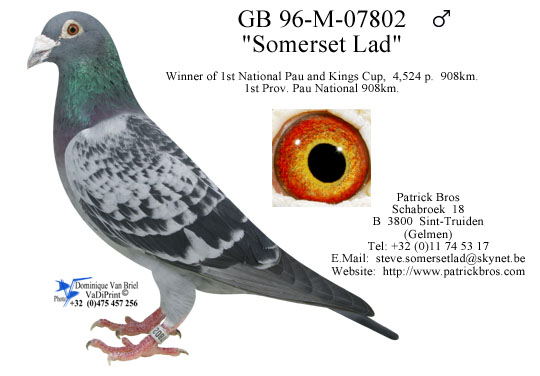
The brothers have introduced many well bred pigeons to help in their quest to improve and develop their outstanding National Winning Family. Pigeons of the caliber of a Son and Daughter of ‘INVINCIBLE SPIRIT’ 1st Dutch National, 1st International Barcelona; a daughter of ‘DE BARCELONA’ 1st National Barcelona 4th International Barcelona; a daughter of ‘Verrewege de BESTE. 1st Dutch National Barcelona. In addition a son and daughter of ‘DE SMARAGD 2, 1st Dutch National Barcelona, 1st International Barcelona, plus a daughter of ‘DE VALE BARCELONA’ 1stNationalBarcelona. Further introductions were made such as a daughter of Peter van den Eijndens, ‘MADAM PERPIGNAN, 1st Dutch National 1st International Perpignan, a son of Laureaat Barcelona. 1st National 1st International Barcelona etc, plus a half brother and a son of the fabulous racer of Stefaan Meremans ‘BARCELONA 1. A daughter of Herman Brinkman’s base breeder the ‘GOUDEN KWEKER’ was also brought in along with a daughter of Brinkman’s ace racer ‘BRINKIE BOY’ plus a son of Ace racer ‘MIEP- MIEP. From H.Wijnands & Son further introductions were made, including a daughter of the Ace racer/ breeder ‘DE BORDEAUX’ and son of the famous ‘BLAUWE VANOPPEN’ All these pigeons carry the common base of Jan Aarden and van der Wegen bloodlines to make the family even stronger. In a small part, but of great importance, was the introduction of the bloodlines of the master breeder Andre Vanbruane. When the Van Bruaenes were blended in with the lofts top breeders such as the original base Cocks 'DE 505' which was a son of Dolle 2 and the fabulous ‘JONGE FAVORIET’ a son of M.V. GEELS. ‘Favoriet’ the performances of the offspring were fantastic. They also excelled when crossed with the brothers’ two Grandchildren of the Immortal ‘OUDE DOLLE 67’. The Vanbruaene influence can also be seen in the breeding of the fantastic co-founder of the loft – the ace racer/ breeder ‘ONIVIEW GRAND’ not forgetting the brothers’ Pau Grand National Winner ‘SOMERSET LAD.’ Both Jonge Favoriet and De 505 filled eggs up to 2003 at 15years old which shows the longevity and power of this family.
In recent years, a small select family of CHRIS van der VELDEN of the Netherlands has been introduced, including sons and Daughters of his Top Racers and Breeders such as. DE SOLO, DE JEROM, DE FAVORIT, DE ALLESKUNNER, HET BRILLIANTJE, T’JUWEELTJE etc.
As mentioned earlier in this article, the birds were not raced weekly in a club but only competed in Channel races with the NFC; BBC and CSCFC. It would be an impossible task to list every performance, however while competing with the National Flying Club, in the 3 years 1999-2000-2002 racing from France the brothers’ pigeons won 91 positions including 1st OPEN PAU GRAND NATIONAL and KINGS CUP. During the same years 1999-2000-2002 racing in the British Barcelona Club and Central Southern Classic they won another 125 Postitions in French Cross Channel racing in races between 127 miles to 660 miles.
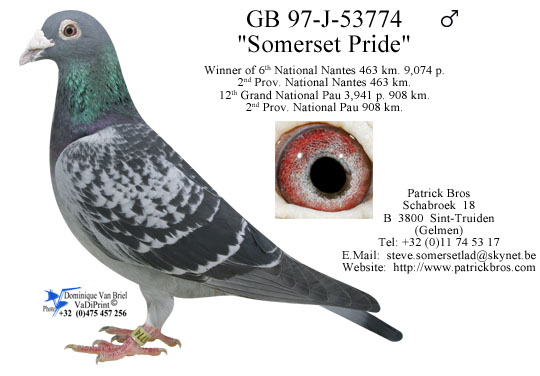
Amongst the many achievements during this time was the winning in the 2000 season, of “ACE Pigeon of the all England Nationals” with Champion ‘SOMERSET PRIDE’, This award is for pigeons being in the prizes in all the Old bird races with the National Flying Club The brothers were also winners of 17 Major Trophies in the National Flying Club 1999-2000. Over the years the Patrick pigeons won a total of 6 Royal Pigeon Racing Association Meritorious Awards for Individual performances.
In the winter of 2002-3 Steve and Philip made a massive decision in that they decided to make a complete break from racing in England and so moves were set afoot to relocate to Belgium with a view to competing in National and International races against the best of the Continentals “in their own back yard”. As a result very little time was spent with the birds in the build up to the 2003 season as both Philip and Steve were constantly commuting between the West Country and Belgium in their search for a suitable house and loft location. However, the following are some of the positions won in the British Barcelona Club and the National Flying club:- 66th 72nd 109th 128th 135th 136th 173rd 210th 213th 232nd 234th 248th 280th 306th 348th 385th 386th in National Races. At the end of the 2003 Season the majority of the race team was sold with only three of the old birds being retained in readiness for the move to Belgium.
However, after much searching, a suitable house was found in the beautiful city of Sint-Truiden, Limburg and the move completed in the beginning of February 2004.
The loft was the first priority and this was soon completed and the pigeons brought over from England. A team of young birds were bred in August and September and these were destined to be the start of the new phase of the family which was to compete in Belgium.
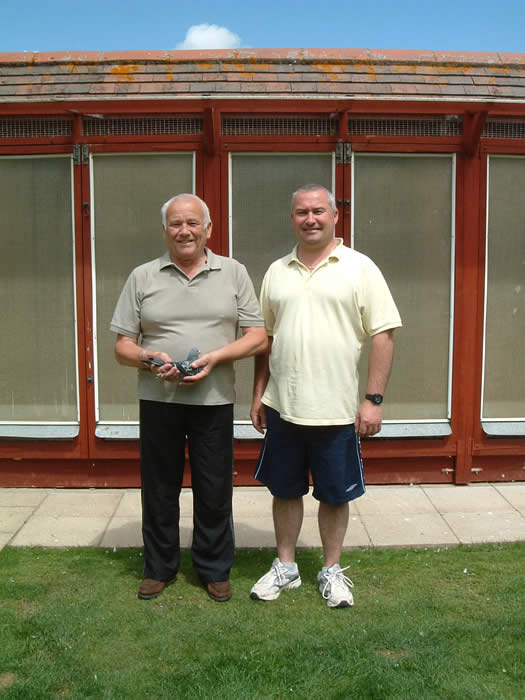
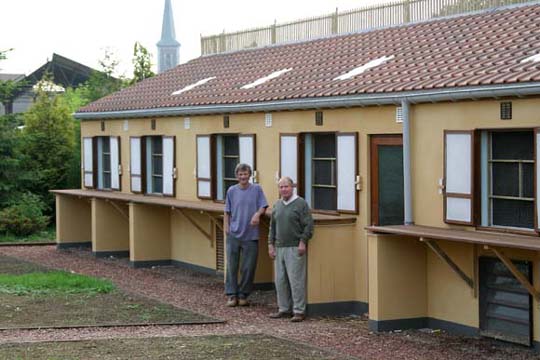
The loft is a forty five foot block built structure with tiled roof which has ventilation tiles fitted throughout its length. Air comes into the loft via louvers situated beneath the trapping windows at the front of the loft and exits via ventilation spaces in the ceiling. These ventilation spaces set in the ceiling are situated at least two feet in front of the top row of nest boxes to ensure that the birds are not resting in a draught.
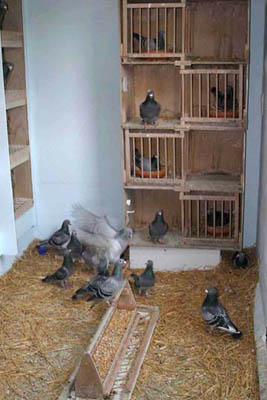
The loft has six sections two of which are fitted out with nest boxes that can house a maximum of twenty cocks although these are rarely filled. The other sections house the young bird team, the stock birds and the racing hens. All sections have movable wire aviaries attached which can be removed completely when the need arises.
The 2006 season was the brothers first full season racing in Belgium competing at National and International level and as Steve was to remark” It was a steep learning curve for us not only in the amount of races a fancier can enter weekly but also by the system of race marking and the pooling of pigeons plus of course the whole method over here in Belgiumwhich is completely different from racing in the UK”. Nevertheless the birds did well with yearlings going out to close on 600 miles.
Since those early days the Patrick Brothers pigeons have gone on to excel at club, Provincial, National and International level winning consistently at all levels and distances out to Barcelona at 650 + miles.
Whereas the brothers raced only widowhood cocks in the UK, they have now adopted a system whereby both cocks and hens are raced on a form of round about system in the early part of the season. They are then re-mated to compete in the extreme distance races whilst sitting eggs or feeding young birds.
The season starts, or to be more accurate never really ends, in January when the race birds have their liberty once more after their winter confinement to the loft. In preparation for this free flying, over the previous month, the birds have been fed a lighter diet which includes a fair proportion of barley. This ensures that they are in a more buoyant body shape in readiness for their New Year’s exercise regime. I should point out that these exercise periods only take place in good weather conditions at the beginning of the year.
By the beginning of March the racers are in A1 condition for breeding and all birds can usually be expected to be sitting eggs by the middle of March. The birds rear the first round of youngsters until the babies are 16 days old at which time the hens are taken away and the cocks continue to rear the youngsters until they are ready to wean.
Now the preparation for the races starts in earnest. After a few days the cocks and hens are allowed free flight daily and then training begins with a few short training flights at 10 miles moving on in stages to 40 miles. By the Middle of May they are ready for their first race from 80 miles and then are moved on in three stages to 285 miles.
The racers then get a free week from racing with only two or three private training spins from around 40 miles before being entered in their first National race of the season from Brive 425 miles. This is the final preparatory race for the Barcelona pigeons as there is approximately one month between Brive and Barcelona. The racers are then re- mated so that they go to Barcelona sitting 9 – 12 day old eggs. During this final month, the birds receive 5 or 6 training spins from 40 – 80 miles plus of course their home exercise. At this time the birds are fed a mixture made up from 50% sport and 50% barley. In the eight days immediately before basketting for the Barcelona race they are then fed a mixture containing a high percentage of fats that includes at least 16% soya beans so that they are really pumped up and full of energy by the time basketting arrives. Various supplements are also incorporated into the feeding regime at this time so as to ensure that the birds lack nothing in their diet. The Barcelona birds are then basketted in prime condition so that they can give a good account of themselves.
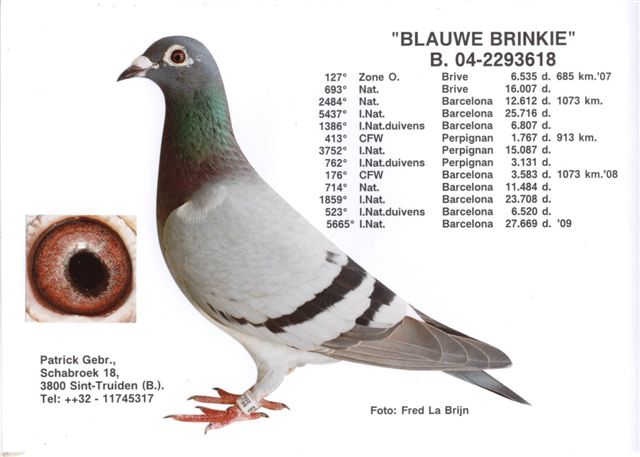
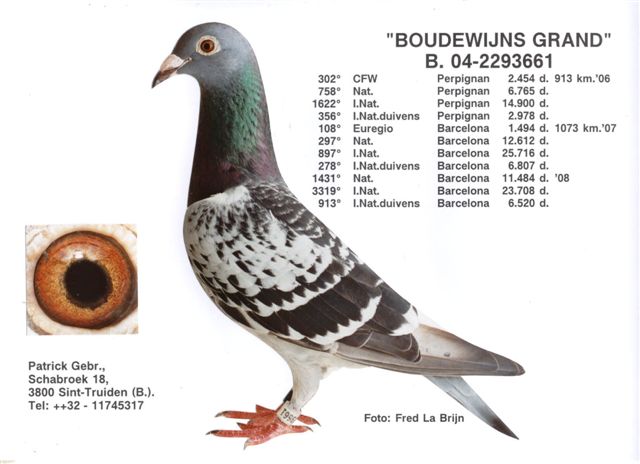
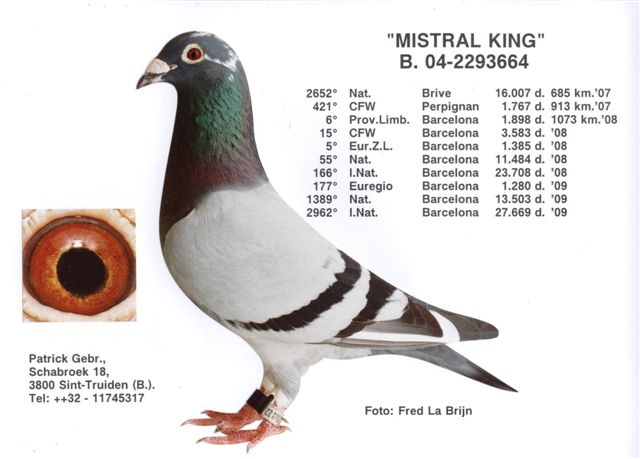
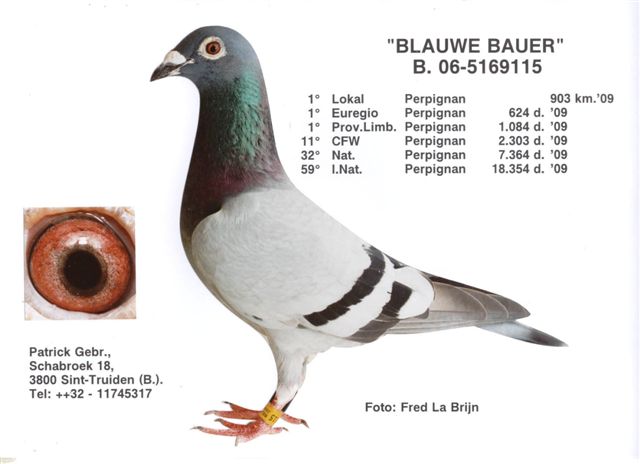
I won’t go into great detail regarding the Brothers many wins since relocating to Belgium as the photographs of the winning pigeons that accompany this article will clearly demonstrate the degree of success that has been achieved. I will however point out that the brothers moved to Belgium in 2004 and, as was the practice when they moved from Shropshire to Somerset, a round of late breds was reared in September and October being weaned in November. Obviously these 16 babies didn’t see the inside of a training basket until the following year. When the Federal had reached the 300 miles stage these late breds, after undergoing private training, were lifted into the races and finished the season having won 3 x 1sts Federal plus numerous other top ten finishes to complete the old bird season as Federal Champions!
Since that time there has been no serious club or Federal racing as these races are used purely to get some flying time into the birds that are being set up for the National and International long distance races.
Incidentally, Steve and Philip do not race young birds but they do train them comprehensively and as yearlings these unraced pigeons are entered in a few training races before being sent out to 585 miles. As two year olds they are then ready for the acid test that is the Barcelona International. The system seems to be working well as in 4 years racing the Patrick team have won 60 positions at National and International level from Barcelona with a further 16 prizes at the same level from Perpignan. I think it safe to say that the move to Belgium has been a success.
JIM DONALDSON
The Jim Donaldson story really starts with Jim and wife Ann’s son who kept a rag tag group of pigeons in the back garden before losing interest once he had found steady employment. However mother Ann had become besotted with the birds and urged Jim to build a “proper” loft in the garden. At the same time the Donaldsons began to read the pigeon papers voraciously and in one edition noticed an advert for a sale of pigeons in aid of a fancier who had been killed in a car crash. Jim attended the sale and two birds in particular caught his eye. These were both bred by a local fancier by the name of Dave Scott. Jim managed to buy one of the Dave Scott pair but the other was purchased by Dave Scott himself. Jim and Dave Scott got to talking after the sale and from this initial contact a strong friendship grew.
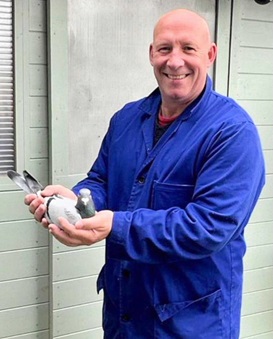
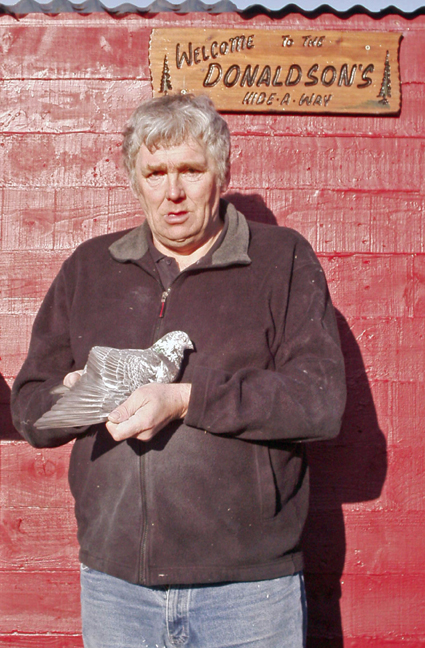
Jim Donaldson holding Reims Girl
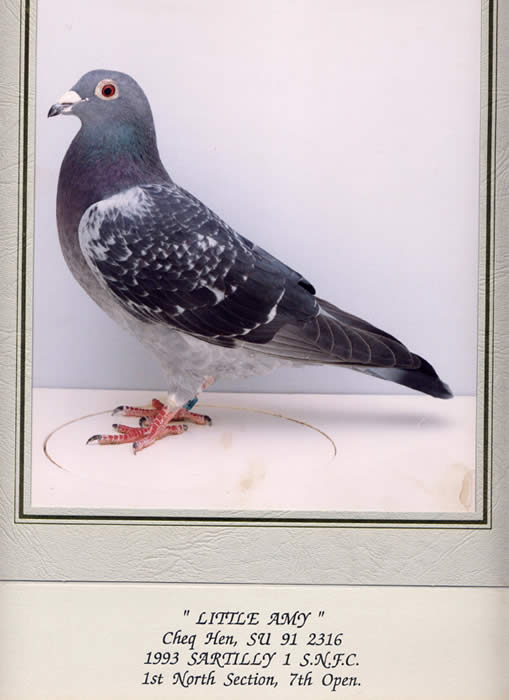
Jim Donaldson then visited the Scott lofts and was extremely impressed with what he saw and decided that these were the birds for him! Dave Scott gifted Jim a pair of youngsters and these along with further introductions were the foundation of the Donaldson family of pigeons. Dave Scott’s pigeons were based on the pigeons of the late Norman N Dall of Ladybank and the outstanding multi National winning birds of Atwell Brothers from Newport in Wales. A further addition to this base was made when Jim introduced a grizzle hen bred by Mr Geddes of Greengairs and from these pigeons a chequer hen was bred that won 4th section 7th open SNFC Nantes . This hen was to become a gold mine at stock breeding countless national prize winners.
Old bird boxes

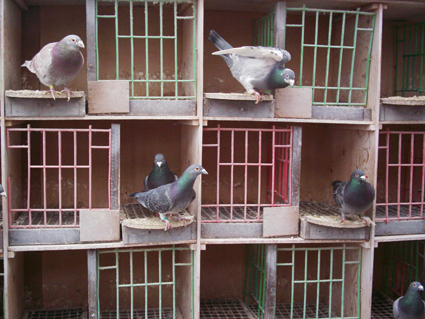
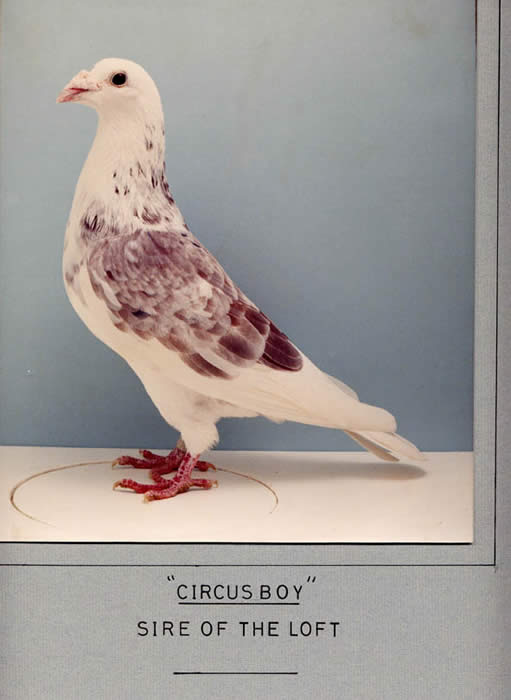
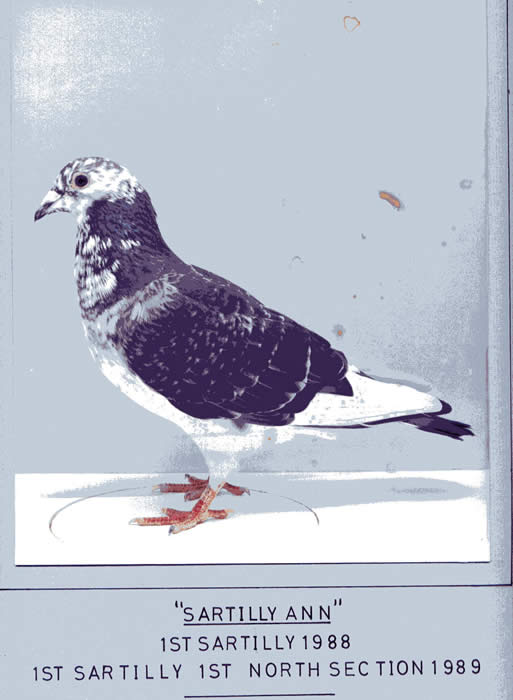
Later introductions were made in the form of six birds from Sid Beard of Hemel Hampstead. These contained the bloodlines of the great Pau National winning hen Lancashire Rose and the Vaux Usher International winning blue cock “Blue Anglia”. This introduction was to produce what was to become the foundation stone of the Donaldson loft – the great “Circus Boy. This cock was raced through to 480 miles but was later lost in a short sprint race. However before going awol he had reared two youngsters which proved to be the only 2 birds home on the day to the loft in a very difficult race. In addition a sister had also shown her potential by being 1st north section Sartilly. Luckily for the Donaldsons the cock was reported in the south east of England. He was returned to Scotland near to death but survived to go on to breed winner after winner for the Donaldsons at all levels of competition.
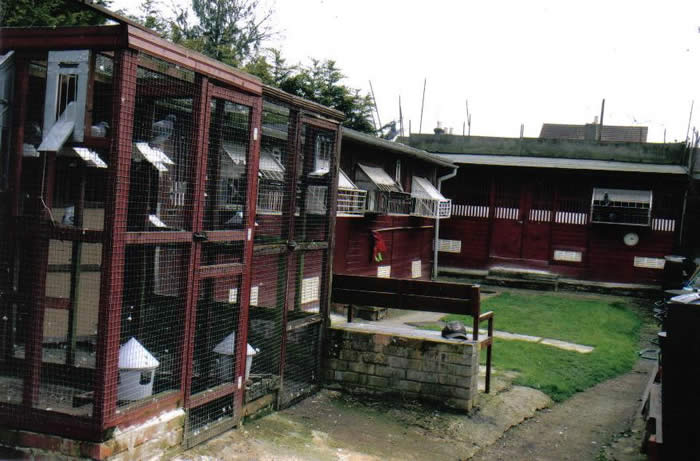
Main racing loft of Jim Donaldson
There you have a brief outline of the base of the present day Donaldson family of long distance racers. How are these birds managed so that they can keep producing outstanding performances in races between 600 and 700 miles for year upon year? Read on.
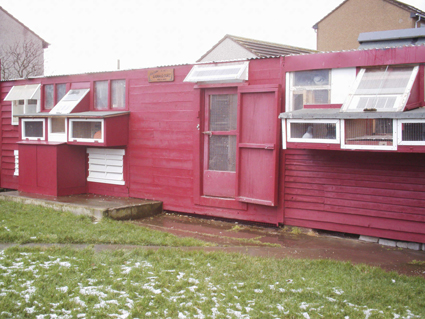
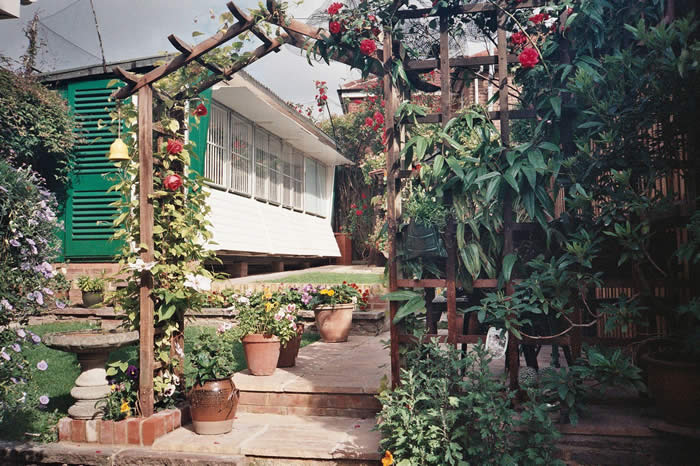
Thirty five pairs of old birds are raced on the natural system. Not all of these are raced as Jim likes to keep some pigeons at home as mates for his main National candidates. A team of 70 or so young birds are reared annually and the complete team of old and young are housed in a four sectioned loft. Three sections are used to house the old birds with the fourth section housing the young bird team. As can be seen from the photograph that accompanies this article the loft is, of necessity, fairly enclosed due to the harsh climate experienced in the far north east of Scotland. Ventilation within the loft is however excellent – an essential factor in any winning loft.
The old bird racers are mated in the middle of February and very little training is given before the first club race of the season – again due to the inclement weather experienced in the region in the early part of the year. If Jim can get a couple of thirty mile tosses in before the first race he is satisfied as long as the birds are exercising well around home. This home exercise takes the form of twice daily stints which usually last for around one hour on each occasion.
The old birds designated for the long distance Nationals are trained minimally. However, great use is made of the club inland race programme in order to prepare the National candidates for the longer classic events. National candidates are very often lifted off the loft into races of between 150 and 200 miles, with the addition of one further race at 300 miles. On their return from this 300 mile race the birds are given an open loft to come and go as they please before being packed off to compete at 600/700 miles in their preferred nest condition and as Jim’s record shows, usually with great success. This preparation for extreme distance racing is very closely mirrored in the method of preparation employed by the great English long distance enthusiast John Wills.
Donnann - 1st SNFC Sartilly
Young birds are given a fairly severe testing in their year of birth with the majority of the young bird team going to every race with the federation up to 220 miles. Jim then selects about 10 youngsters that are entered into the young bird National at 360 miles. To survive this testing programme the youngsters must have a strong constitution and this is what Jim insists on in his long distance candidates. In order to cope with this severe race programme the youngsters are fed a fairly heavy mixture which is made up from a commercial young bird mixture to which Jim adds maple peas. As yearlings if all is well, they are raced as far as the south coast of England which is a distance of 470 miles to the Donaldson loft in Peterhead. Two year olds and over go to the bitter end at 600- 700 miles if fit and well.
Old birds are fed in their boxes and have access to food in their galley pots at all times. During the breeding season the birds are fed a breeding mixture plus maple peas until the young birds are weaned. Once racing, this mixture is changed to a widowhood mixture until the 300 miles mark is reached after which maple peas are again added in the final build up to the longer races. In the final week before basketting for a long distance National race small seeds and peanuts are also included in the feed for the birds, as Jim has noticed that when the birds start to come into condition they stop eating and so the peanuts and small seeds are included in the diet to encourage them to eat.
Jim Donaldson does not treat his pigeons as a preventative for any of the common ailments – the only thing they get is the compulsory injection for Paramyxo. He prefers to rely on the birds’ inbred natural immunity and a strong constitution. The survival of the fittest is strictly applied here, with the basket being the final arbiter.
Listed below are some of Jim Donaldson’s top racers along with some recent results achieved by the Donaldson loft in National races, most of which are over 600 miles to Jim’s Peterhead loft.
“Donnann” the winner of 1st Open SNFC Sartilly was bred from a blue cock from Dennis N Dall of Ladybank. The dam of Donnann was “Rennes Lass” who won 7th section in the young bird national from Cheltenham 380 miles. Dam of Rennes Lass was 453 who won 1st section and was twice 3rd section from Sartilly, she in turn was a daughter of Circus Boy. The Dall Cock and Rennes Lass proved to be a terrific stock pair as they were responsible for birds to win countless national diplomas over the years including:- Little Jenny; Little Lara; and Chequer Cock 2682.
Little Jenny won 1st north section Sartilly 1997; 2nd north section Rennes in 1998; 1st north section 6th open Nantes in 2000, but was lost off the loft the following year.
Little Lara was one of only 2 birds home from a young bird smash; she then won 3rd north section Sartilly in 1999; 1st north section Messac 2000; 4th north section Liege 2001; 3rd north section Chenoise 2002.
Chequer Cock 2682 won 5th north section Frome (433miles); 9th north section 52nd open Clermont (589 miles) 2002; 5th north section Chenoise (643 miles) 2003; 1st north section Tours (707 miles) 2004 he has now been retired to stock.
Bluetoon Lass blue pied hen has won from a youngster being 9th region G Leicester young bird national (339 miles) 2001; 13th north section 91st open Newbury (422 miles) in 2003; 2nd north section 73rd open Falaise (601 miles) 2004; 5th north section 105th open Falaise 2005; 1st north section 83rd open Alencon (631 miles].
Another top hen was Niort Lady; winner of 2nd north section 14th open Sartilly; 1st north section 34th open Niort a distance of 775 miles. She was bred from Circus Boy when he was 11 years old whilst her dam was a 10 year old pure bred Davie Scott hen.
Niort Lady
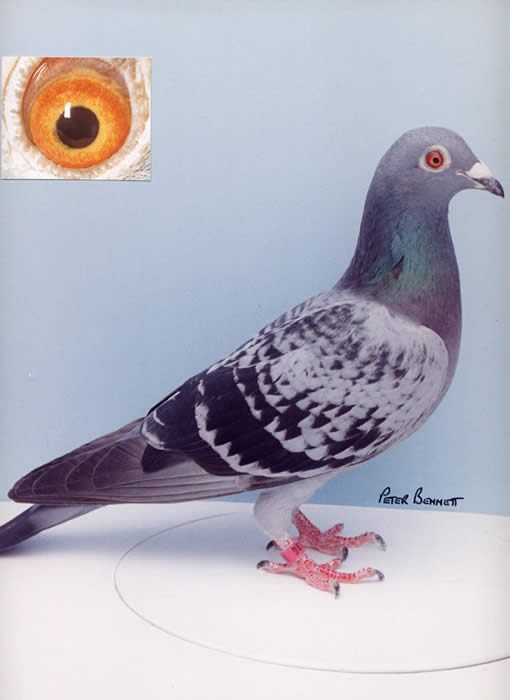
Reims Girl, possibly the greatest pigeon raced by the Donaldsons, has the following list of performances:-
1st north section 52nd open SNFC Reims 620 miles in 2002
1st north section 239th open SNFC Reims in 2003
2nd north section Tours flying 707 miles beaten by a loft mate for the top award in 2004
2nd north section 7th open Tours flying 707 miles again beaten by loft mate in 2005
1st north section 13th open Tours flying 707 miles in 2006 winning SNFC Gold Award. Sire is 1775 a full brother to Donnann the National winner; Dam was 2630 a grizzle hen who won 3rd north section in one of the hardest young bird nationals flying into the north section; when she was timed at dinner time on the second day from Cheltenham a distance of 386 miles. The dam of 2630 was 420 also a grizzle hen who in turn was a full sister to Sartilly Ann winner if 1st north section Sartilly she in turn was a daughter of Circus Boy.
You will see that on the 2 occasions she was beaten this was by her own loft mates which is truly remarkable achievement as Reims Girl was not far from being a 5 times winner of 1st north section, a truly remarkable series of long distance performances. She is the furthest flying pigeon in the history of the SNFC to win a Gold Award.
Reims Girl - SNFC Gold Award Winner
I could go on listing the top performers in this loft full of top performers but I think the above adequately outlines the absolute abundance of outstanding long distance pigeons housed at these lofts.
Now for some of the highlights over the past fifteen years starting with 1995 season’s racing.
Sartilly 1 1st, 4th, 5th, 9th& 10th section 56th & 144th open 605 miles
Rennes 1st sect 133rd Open 650 miles
Niort 1st sect 40th open 775 miles
Sartilly 2 1st & 4th sect 1st open 605 miles
2000
Newbury inland national 10th section 422 miles
Messac 1st section 42nd open 669 miles
Nantes 1st section 6th open 709 miles
Vire 2nd, 8th& 9th sect 66th open 600 miles
Leicester. 12th, 15th& 16th sect 339 miles
winning north section average S.N.F.C.
2001 - no French racing
Frome 5th& 8th section 433 miles.
Liege 4th sect 469 miles
Hastings 2nd& 4th sect 469 miles
Portland 5th sect 481 miles
Leicester[ yb] 6th, 9th& 12th sect 339 miles
winning north section averages S.N.F.C.
2002
Newbury 4th section 422 miles
Reims 1st, 2nd, 4th& 6th section 58th& 83rd Open 620 miles
Chenoise 3rd section 643 miles
Clermont 2nd , 4th, 9th& 11th section 7th, 18th, 52nd& 96th open 589 miles
Leicester yb 12th section 339 miles
winning the north section averages S.N.F.C.
2003
Newbury inland 13th sect; 91st , 163rd , 249th & 251st open 422 miles
Reims 1st , 4th & 5th sect 620 miles
Chenoise 5th section 643 miles
Leicester [yb] 6th, 8th & 9th sect 39th, 49th & 51st Open 339 miles, yet again
winning the north section averages S.N.F.C.
2004
Newbury 20th section 422miles
Falaise 1st & 2nd sect 69th & 72nd Open 501 miles
La Ferte Bernard 19 th section 652 miles
Tours 1st & 2nd section 707 miles
Falaise 7th & 15th sect 96th open 601 miles
Cheltenham [yb] 19th section 386 miles once more
winning the north section averages S.N.F.C.
2005
Newbury 4th &7th section 422 miles
Alencon 10th & 14th section 631 miles
Tours 1st, 2nd & 4th section 4th, 7th & 49th Open 707 miles
Falaise 5th &7th sect 104th & 131st open 601 miles
Cheltenham [young birds] 18th sect 386 miles
winning the north section averages S.N.F.C.
2006
Alencon 1st section 83rd open 631 miles
Tours 1st& 5th section 13th& 59th open 707 miles
Falaise 5th, 12th& 17th sect 601 miles
winning the north section averages S.N.F.C.for the umpteenth time.
Rennes Lass - dam of 7x1st section winners
That then is a brief insight into the birds and methods of one of the greatest exponents of long distance pigeon racing in the history of the Scottish fancy. Yet again we see an outstanding fancier with no fancy methods, applying good commonsense principles to tried and tested pigeons of sound constitution, which have been bred from generations of quality long distance stock.
My thanks to Cameron Stansfield and Joe Murphy for their help in preparing this article.