
The Art of Breeding, Conditioning & Racing Pigeons for Long Distance Racing - Part 7
by Gareth Watkins
In this article in the series I would like to cover three lofts that have achieved great success at National level in races between 200 and 700 miles. Two Welsh fanciers are included along with Paul Stone of West Drayton in Middlesex. All three are dedicated distance fanciers, although it must be said that both John Gauvain and Brian Tawton have gained a great deal of success in club and federation races at short and middle distance.
JOHN GAUVAIN of MAERDY, RHONDDA
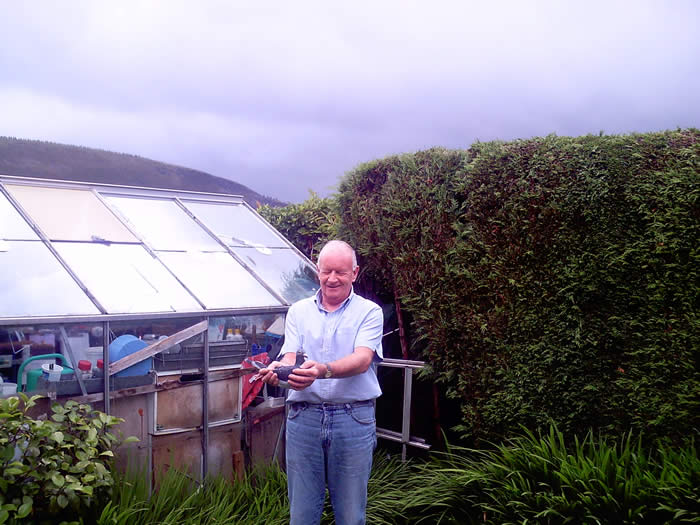
At 05.57 a.m. on Sunday 24th June 2007 John Gauvain clocked his single entry in the Welsh South Road National race from Pau and realised his lifetime’s ambition of winning a National race. For those of us flying pigeons into the Rhondda Valley this came as no surprise, the only surprise being that John had not won a National race long before that time, such had been his consistency in long distance National races. What is even more amazing in regards to the 2007 Pau National win, is the fact that John underwent open heart surgery just nine weeks before clocking the National winner!
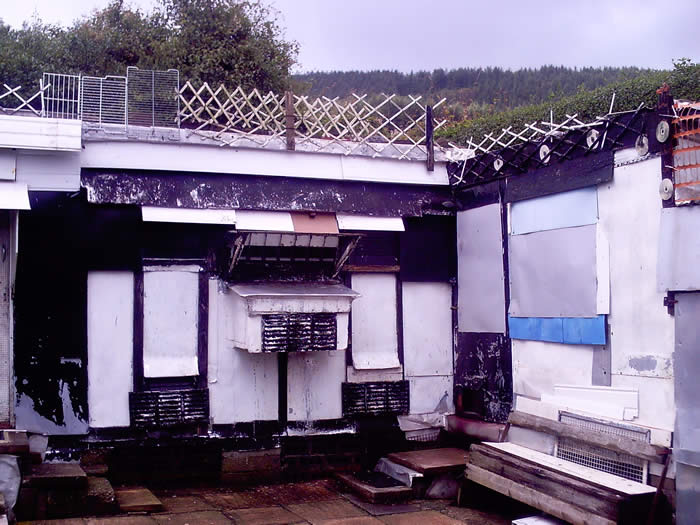
The Gauvain lofts are home built and range around two sides of the garden surrounded by high walls which are masked by the greenery of fast growing Leilandii. The main racing loft measuring 20 ft x 8 ft, has two sections for old birds plus an 8 ft x 8 ft section for the young bird team. In addition there is a small section for just six hens tucked in at one end and it was to this small section that the Pau National winner raced. This is not a massive set up, but it is professionally organised, so that John gets the maximum results from his small team of just 13 pairs of old birds and 50 or so youngsters augmented by a stock bird team of just eight pairs. I should also point out that, following a heart attack in 2002, most of John’s birds were put up for auction and sold. However some birds could not raise a bid and so at the end of the sale John was left with 11 cocks and 3 hens. What was he to do?
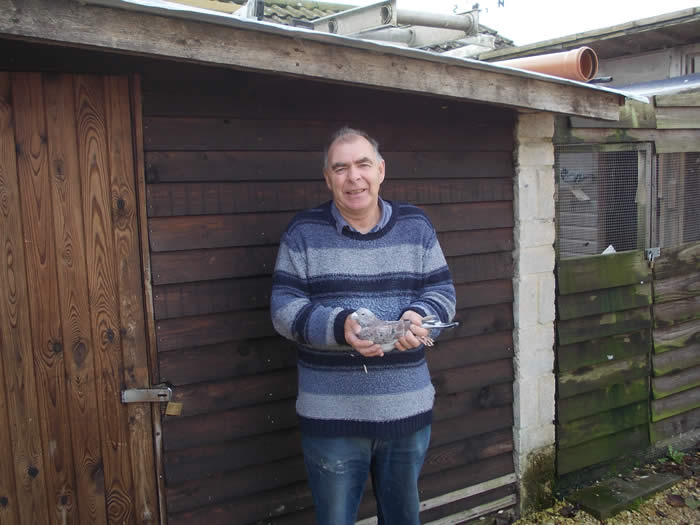
John Gauvain holding his Pau National winner
This is where John’s wife Mair, and good friend Glyn Foster step into the story. Mair convinced John to carry on racing with just a handful of pigeons and Glyn gifted John a young hen that he had bought at John’s sale. Guess what – this proved to be the Pau National winner. One of the young cocks that could not find a bidder in the sale also went on to leave his mark, when in 2006 he was clocked on the day from Bergerac at over 500 miles to win 1st section 3rd Open National .beating the vast majority of all other convoys liberated simultaneously at Bergerac that day. It reads like a fairy story I know but it is absolutely true.
At the start of the season the Gauvain race team usually amounts to just 27 old bird racers. The majority of these are raced on the roundabout system with just six hens raced on almost pure widowhood as their mates are not raced. The birds are raced most weeks and are then repaired so that they are sitting when entered for the long distance specialist races that take place towards the end of the season. Just prior basketting for the 2007 Pau race John was concerned that his single candidate for the race was getting a “bit frisky” and might go into egg so he placed a pot egg in her nest pan which she took to immediately and followed this the next day with a second egg. She was therefore entered for Pau sitting one day eggs. Her race preparation for Pau was races from Lyndhurst, Littlehampton, Picauville and Lessay and then jumped straight into Pau at more than 590 miles. John has found that whereas his cocks will fly freely for 45 minutes – 1 hour twice daily, his hens are reluctant to fly for more than 20 minutes at a time and so they are trained twice weekly from 40 miles on Chris Jones’s transporter. The sexes do not see each other on basketting night but are always allowed free time together when they return home. All birds are fed individually in their boxes with a breeding mixture obtained from Court Farm Feeds and this is diluted slightly by the addition of a small proportion of barley. Peanuts are also used as an incentive in the build up to the longer races. The race team is treated before racing with a 3 in 1 treatment for cocci, canker and worms and also receive regular repeat treatment with the same product throughout the season.
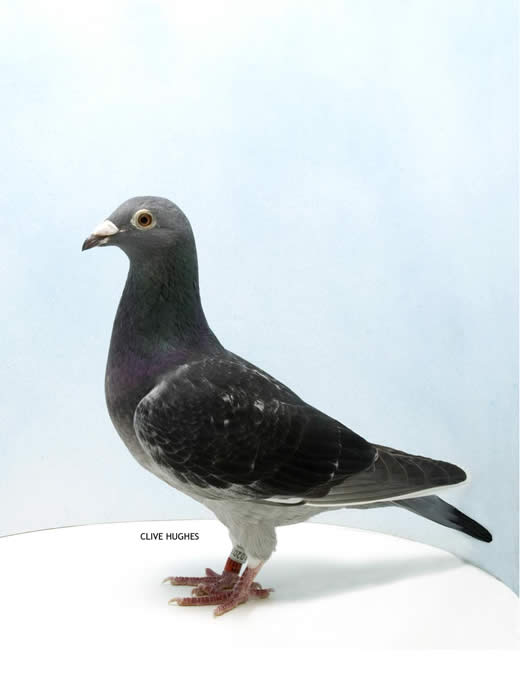
John Gauvain's Pau National winner
The birds that John races are a combination of bloodlines. Van Loons and Jan Loots from Freddy Edwards and family of Penywaun; Taffy Bowen Kamikaze’s and Westcott / Hansenne / Vanbruaenes from Roy Thomas of Maerdy. The Pau National winner was a lovely strongly built black chequer W/F hen containing the very best of Bowen Brothers of Porthcawl double Lerwick National winning Westcott- Hansenne- Vanbruaenes family on her sire’s side via Roy Thomas, combined with Louella pigeons of Fallahill Superstar x “Champion Gladys” x Kuypers on the dam’s side. The Pau winner is in fact related on her sire’s side to the Dax National winner of Ray Strawbridge of Newport. It certainly is a small world as far as top class long distance racers are concerned.
I will finish this report by highlighting some of John Gauvain’s wins over recent years. Take for example the 2006 season when he raced a modest team of just 7 cocks and 6 hens backed up by a 22 strong young bird team. Competing with the Welsh South Road Fed the Gauvain team won 13 x 1sts section and 2 x 1st Open Fed. In National racing over recent years they have won, amongst others 10th, 13th & 18th Open from New Pitsligo 420 miles on the north road. In south road National racing, again, the last few seasons only:- 4th, 10th 19th, 31st, 36th, 36th Open Saintes 420 + miles; Nantes 15th Open; Pau 1st and 51st Open; Bergerac 3rd, 20th, 31st, 32nd Open; Picauville 11th Open; Cholet 32nd & 36th Open. Add to these positions 1st section Messac and 9th Open Anglo / Welsh National from San Sebastian and you have a pretty impressive record given the recent circumstances outlined in the earlier paragraphs.
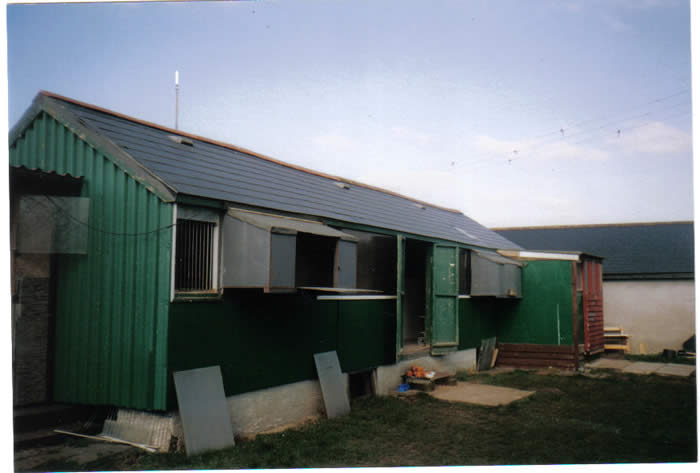
The Gauvain loft
The Rhondda Valley 600 mile Social Circle was formed in the winter of 1963 with the intention of honouring the winners of the longest race flown into the Rhondda Valley each year. An initial joining fee was set at just five shillings[25 pence] and the proceeds of this membership fee was used to purchase three silver trophies the likes of which would be the envy of most National Flying Clubs. John Gauvain has won 3x 1sts; 3x2nds & 3x 3rds, including a hattrick of wins in 2006/7/8, competing against some of the great names of Welsh pigeon racing. So the reader can see that John has the credentials of a truly top class long distance fancier. Due to continued health problems, John has had to take a sabbatical from pigeon racing for a season or two but hopes to be back in the thick of it in 2011. Good luck for the future John.
LONG DISTANCE SUCCESS FROM LERWICK TO KASSEL. BRIAN TAWTON OF CARDIFF
THE SUBJECT OF THIS SECTION OF THE ARTICLE IS BRIAN TAWTON OF ELY IN CARDIFF WHO HAS ESTABLISHED HIMSELF OVER THE PAST FIFTEEN YEARS AS THE TOP LONG DISTANCE FANCIER IN THE CAPITAL CITY. HE HAS ACHIEVED THIS DISTINCTION BY WAY OF CONSISTENT SUCCESS FROM THE LONG DISTANCE RACES BOTH ON THE NORTH ROAD THROUGH TO LERWICK 610 MILES AND ON THE EAST ROUTE THROUGH TO KASSEL IN GERMANY SOME 550 MILES. THESE NORTH ROAD SUCCESSES INCLUDE 2ND; 7TH & 20TH OPEN NATIONAL THURSO IN SEASONS 2001/2/3 PLUS 5TH; 5TH; 2ND; 3RD OPEN NATIONAL CRIEFF IN SEASONS 2000/1/2/3. AND TO PUT THE ICING ON THE CAKE, 1ST NATIONAL HEXHAM PLUS 8TH; 9TH; 12TH & 17TH OPEN IN HEXHAM NATIONALS IN RECENT YEARS. ADD TO THESE NATIONAL SUCCESSES NUMEROUS WINS AT FEDERATION LEVEL WITH THE MASSIVE WELSH NORTH ROAD FED INCLUDING 2 X 1ST OPEN FROM CRIEFF 340 MILES AND THE READER CAN MORE EASILY APPRECIATE HOW BRIAN HAS ACHIEVED HIS ENVIABLE REPUTATION.
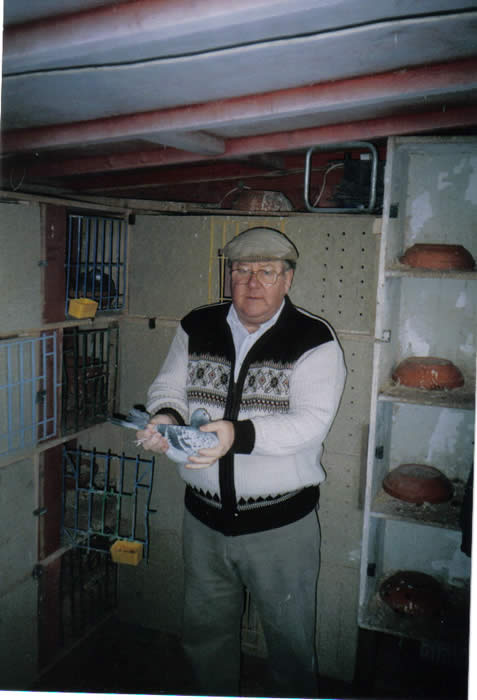
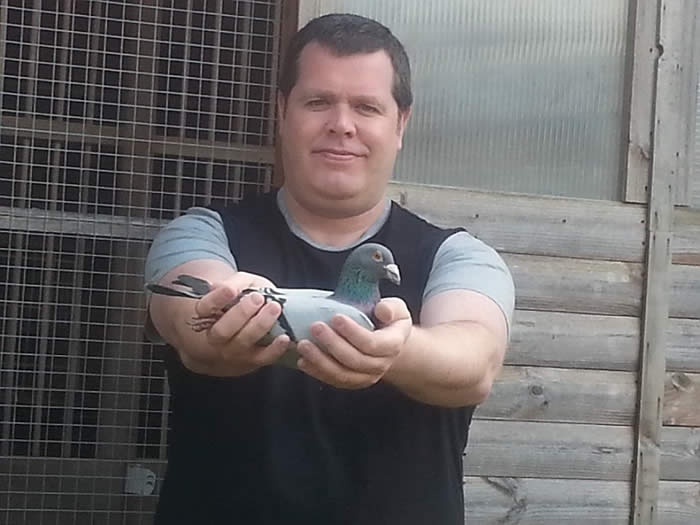
Brian Tawton in his widowhood section
FOR A NUMBER OF YEARS, BRIAN COMPETED IN PARTNERSHIP WITH DEREK COLE, HOWEVER IN 2007 DEREK DECIDED TO SPEND MORE TIME WITH HIS YOUNG FAMILY AND THE PARTNERSHIP WAS AMICABLY DISSOLVED. AS A RESULT OF THE BREAKUP OF THE PARTNERSHIP MANY OF THE STOCK BIRDS AND OLDER RACERS WERE SOLD AT AUCTION AND THE LOFT’S PRESENT DAY SUCCESSES HAVE BEEN ACHIEVED BY BRIAN RACING A RELATIVELY YOUNG TEAM OF PIGEONS. NEVERTHELESS, SUCCESS HAS FOLLOWED RIGHT ACROSS THE BOARD WITH MANY WINS FROM 60 – 520 MILES.
THE BIRDS THAT HAVE ACHIEVED THIS PHENOMENAL STRIKE RATE IN LONG DISTANCE CLASSIC RACES ARE FOR THE MOST PART ALL RELATED IN AS MUCH AS THEY ARE OF BUSSCHAERT ORIGIN AND CONTAIN THE BLOODLINES OF EDDIE LAUDER’S CHAMPION “EDDIE’S SUPREME”. ADDED TO THIS BASE ARE OTHER BUSSCHAERTS INCLUDING “GOLDMINE” AND “STUDTOPPER” LINES ALL FROM LOUELLA STUD. VARIOUS OTHER INDIVIDUAL BIRDS HAVE BEEN PURCHASED PERIODICALLY BUT THE BULK OF THE WINNING BIRDS EMANATE FROM THE MAGNIFICENT “EDDIE’S SUPREME” LINE OF BUSSCHAERTS.
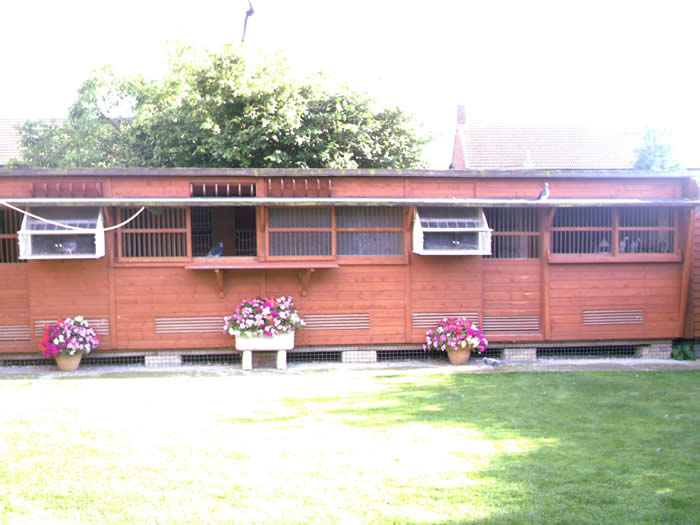
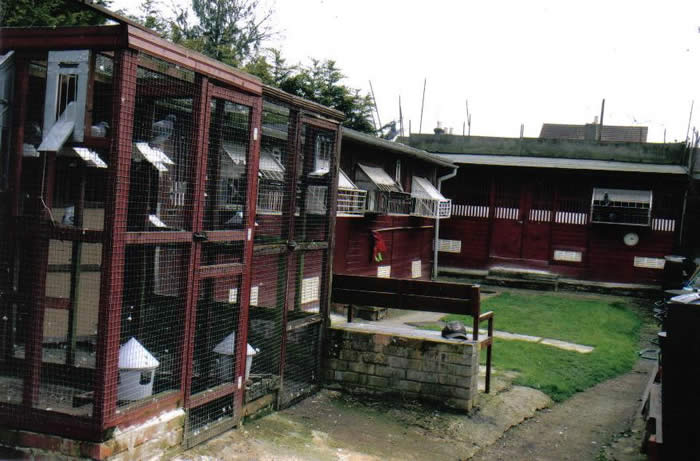
Brian Tawton racing loft
DURING MY VISIT I HANDLED FIVE OR SIX CLOSELY RELATED STOCK PIGEONS ANY OF WHICH WOULD NOT HAVE LOOKED OUT OF PLACE IN SOME OF THE TOP LOFTS IN EUROPE. ABOVE MEDIUM SIZED DARK CHEQUERS THEY TRULY WERE SUPERB SPECIMENS AND ALL HAD WON ON THE ROAD AND / OR BRED NUMEROUS WINNERS IN LONG DISTANCE RACES FOR THE PARTNERS AND OTHERS. OLDER READERS MIGHT REMEMBER THE OLD GURNAYS OF RENIER GURNAY AND FRED SHAW - WELL THESE “CARDIFF BUSSCHAERTS” ARE ABSOLUTE RINGERS FOR THOSE BEAUTIFUL OLD GURNAYS. NOT ONLY DO THEY LOOK SUPERB BUT THEY ALSO HANDLE LIKE DREAMS AND MUST BE A PLEASURE TO OWN COMBINING BEAUTY, BRAINS AND WINNING GENES IN ABUNDANCE.
THE RACE TEAM IS HOUSED IN A 40 FT X 12 FT MULTI SECTIONED LOFT THAT FACES SOUTH EAST. SITUATED IN A FIELD ON A HILL OVERLOOKING THE CAPITAL CITY, THIS IDYLLIC RURAL SETTING ALSO ACTS AS HOME TO NUMEROUS COCK PHEASANTS WHICH WERE PROUDLY PARADING IN THE FIELD NEXT TO THE LOFT AT THE TIME OF OUR VISIT. THE LOFT COMPOUND ITSELF IS OFTEN OVERRUN WITH RABBITS AND THERE WERE ALSO SIGNS OF MOLE ACTIVITY INTO THE BARGAIN!
THE 19 PAIRS OF STOCK BIRDS ARE HOUSED IN AN 11 FT X 6 FT STOCK LOFT WITH AVIARY ATTACHED AND IS SITUATED AT THE SIDE OF THE MAIN RACING LOFT. THERE IS NO HINT OFOVERCROWDING IN EITHER LOFT AS EACH PIGEON WAS AFFORDED AMPLE SPACE. THIS OBVIOUSLY HELPS IN REDUCING THE RISK OF DISEASE GAINING A FOOTHOLD.
Brian Tawton's widowhood section
THE STOCK TEAM INCLUDES ALL THE BIG WINNERS ON THE NORTH ROAD WHICH WERE IMMEDIATELY RETIRED TO STOCK WHEN THE PARTNERSHIP SWITCHED ROUTES TO THE SOUTH EAST A NUMBER OF YEARS AGO.
THE OLD BIRD RACE TEAM USUALLY AMOUNTS TO 30 WIDOWHOOD COCKS AND FROM THE BEST OF THESE AND THE STOCK BIRDS A TEAM OF AROUND 80 BABIES ARE REARED TO COMPETE IN THE LOCAL CLUB, FED AND NATIONALS. YOUNG BIRD RACING IS NOT TAKEN TOO SERIOUSLY AND BRIAN IS QUITE HAPPY TO JUST EDUCATE THEM IN THEIR FIRST YEAR. AS YEARLINGS THEY ARE AGAIN BROUGHT ON STEADILY AND ARE EXPECTED TO COMPETE IN RACES OUT TO BRUSSELS 350 MILES. TWO YEAR OLDS AND OLDER PIGEONS GO TO EVERY OVERSEAS RACE THROUGH TO 550 MILES. IN FACT THE 2004 KASSEL WINNER HAD EVERY RACE IN THE PROGRAMME BEFORE WINNING THE CLUB AND TOP FED AND NATIONAL POSITIONS IN THE LONGEST RACE.
IN 2004 SEASON BRIAN AND DEREK ENTERED 17 PIGEONS IN THE LIEGE RACE, 400 MILES, AND CLOCKED 15 OF THE 17 ON THE DAY INTO A NORTH WEST WIND WHEN MANY FANCIERS FAILED TO TIME A SINGLE BIRD. SO YOU CAN SEE THAT THESE BIRDS ARE PRETTY TOUGH CUSTOMERS.
THE WIDOWERS ARE FED INDIVIDUALLY IN THEIR BOXES ON MIXTURES THAT BRIAN MAKES UP HIMSELF BY COMBINING A NUMBER OF COMMERCIAL MIXES AND STRAIGHT GRAINS. IN SHORT THEY ARE FED FOR THE DISTANCE AND TYPE OF RACE THEY ARE LIKELY TO ENCOUNTER ON RACE DAY. BRIAN IS A VERY ASTUTE FANCIER AND IS CONSTANTLY “THINKING ON HIS FEET” AND ADAPTING THE SYSTEM AS CIRCUMSTANCES DICTATE. EVEN TO THE EXTENT OF FEEDING THE RACERS, CRISPS, PORK SCRATCHINGS AND CHEESE IN PREPARATION FOR THEIR LONG DISTANCE CHALLENGES.
ALL BIRDS ARE TREATED FOR COCCI, CANKER AND WORMS BEFORE RACING STARTS, AS ARE THE STOCK BIRDS WHICH ARE USUALLY MATED AT THE END OF DECEMBER EACH YEAR. WIDOWERS ARE MATED IN MID JANUARY AND ARE ALLOWED TO REAR A PAIR OF YOUNGSTERS AND ARE THEN SEPARATED PRIOR TO BEING REMATED 5 WEEKS BEFORE THE FIRST RACE. THEY ARE THEN ALLOWED TO SIT FOR 5 DAYS BEFORE BEING PLACED ON WIDOWHOOD FOR THE REMAINDER OF THE SEASON. DURING THIS SECOND NEST THE WIDOWERS ARE TRAINED TO 30 MILES AND ONCE ON WIDOWHOOD ARE RARELY TRAINED AGAIN DURING THE SEASON.
WHEN RACING, THE COCKS ARE GIVEN FREE EXECISE FLIGHTS AS MUCH AS THREE TIMES PER DAY AND ARE FED IN AFTER EACH EXERCISE PERIOD WITH EITHER THE CORN MIXTURE OR ONE OF THE AFOREMENTIONED “TREATS”.
THESE PIGEONS HAVE WON FROM THE LONGEST RACEPOINT ON BOTH NORTH AND SOUTH EAST ROUTES. THE SUCCESS STORY HAS CONTINUED ALMOST UNABATED THROUGH TO THE 2010 SEASON, AS THE TAWTON BUSSCHAERTS HAVE CONTINUED TO WIN ON THE SOUTH EAST ROUTE RIGHT THROUGH TO SAVERNE ON THE FRENCH/GERMAN/ SWISS BORDERS, A DISTANCE OF 520 MILES. IN THIS RACE ONE OF BRIAN’S WIDOWERS TOOK 1st CLUB; 2nd FED and 5th COMBINE. THIS PERFORMANCE WAS PRECEDED BY A CLEAN SWEEP OF 1-2-3 FROM PONT – A –MOUSSON NEAR METZ IN THE SOUTH EAST OF FRANCE. MANY PRIZES HAVE ALSO BEEN WON AT CLUB AND FEDERATION LEVEL IN SHORTER RACES, DEMONSTRATING THE VERSATILITY OF THIS FAMILY.
I FEEL SURE THAT, WITH THE QUALITY OF STOCK HOUSED, ALLIED TO BRIAN TAWTON’S ABILITY AS A FANCIER, THEY WOULD NOT DISGRACE THEMSELVES AT THE EXTREME DISTACE ON ANY ROUTE.
PAUL STONE of West Drayton, Middlesex
This section of the article highlights the loft of Paul Stone of Middlesex, who has to his credit a long list of top performances in long distance races including 1st BICC Barcelona in 1997 with his chequer hen “Charlotte” being the only bird on the winning day in the U.K. “Charlotte” was bred direct from “The Shepherd Cock” which is responsible, through successive generations, for the following long distance performers:- 1st, 3rd, 21st, 22nd, 56th Open Barcelona; 2nd, 10th, 11th, 40th, 57th Open Palamos; 23rd, 29th, 31st, 76th Open NFC Pau plus 2nd Open Tarbes, 2nd Open Dax and 1st Greater Distance Club from San Sebastian. The winner of 1st Sect 2nd Open Palamos for the terrific Kent long distance specialists John and Spencer Nicholson is also a double g.g.dtr of the Shepherd Cock. This record must place the “Shepherd Cock” amongst the premier league of producers of long distance racers in the country. Although he is the cornerstone of Paul’s loft he was bred by none other than Jimmy Shepherd of Chichester who has now retired from the sport.
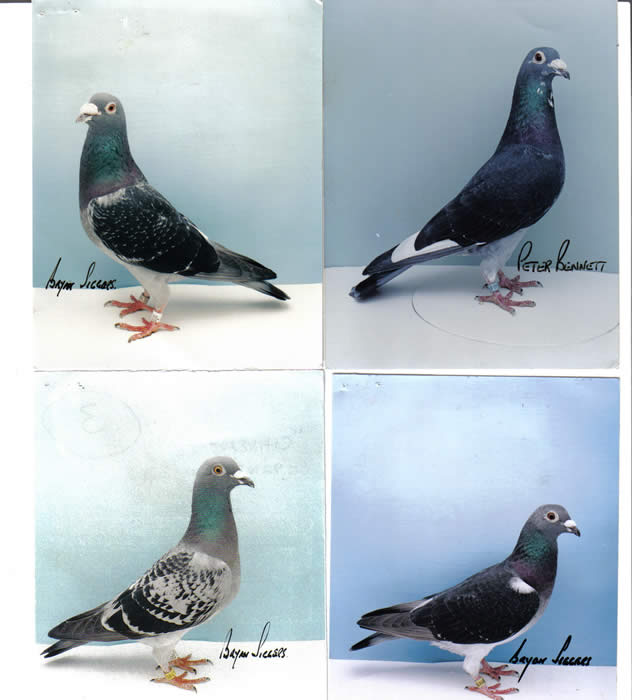
Starting from top left and going clockwise: The Shepherd Cock, champion stock cock and founder of the loft; Blackcurrent, four times Barcelona and winner of 7th & 13th Open BICC. Also g.sire of Charlotte 1st Open Barcelona & Barbie 13th Open BICC plus 1st GDSBNFC Barcelona 2007 and g.g.sire of Sarah 1st Open BICC Barcelona; Lucy, 1st Open GDSBNFC San Sebastian 121st Open NFC; Charlotte, 1st Fed LaFerte Bernard and 1st Open BICC Barcelona only bird into UK on winning day.
Once again, with the Stone loft we see an average back garden set up – no vast arrays of lofts crammed full of pigeons which are sent “en masse” to long distance races in the hope that by the law of averages one must come out. The Stone family of pigeons is based, in the most part, on the Old English family of pigeons developed by the late Norman Southwell. With this family “like breeds like” and there is no need to rear huge numbers of youngsters each year to replace losses. The good ones seem to reproduce pigeons of the same high quality for generation after generation.
Paul first became involved with pigeons in 1969, and with no previous family involvement in the sport, he had to start on the ground floor. The first Southwells were introduced from Jimmy Shepherd in 1987 and to this base other pigeons from Jimmy have been added over the years plus some “Spangles” from other sources. The individuals within the present day family, which has evolved from constant race testing, are generally dark chequer in colour and small to medium sized with shallow keels.
Twenty pairs of old bird racers are maintained and these are raced exclusively on the natural system. A team of 30 – 40 youngsters are reared annually from the best of the racers and the 10 pairs of stock birds. All birds are mated on March 1st so that the youngsters are weaned before any serious racing gets underway.
The birds are housed in a 36 ft loft which faces north. This has a half dowelled front so ventilation is adequate. A form of deep litter is employed during the week with the whole loft getting a spring clean once per week when time allows. Local club racing is used to blow away the cobwebs of winter inactivity prior to serious preparation of the long distance candidates for the job in hand. This takes the form of two short channel races and plenty of private training from the south coast. A good general mixture is fed by hand all year round and this is adjusted as the long races approach, by the addition of extra maize. Regular home exercise is also applied to the race team but Paul is not in a position to operate an open loft system.
The birds are not overtaxed in their first two season’s racing as Paul is happy if the young birds are raced to 150 miles inland in their first season and then sent to 350 miles as yearlings. Two year olds and upwards are expected to make light work of Pau. The team are NOT treated routinely for any of the common ailments but do get the annual jab for paramyxovirus. Other than that they are expected to develop their own immunity from disease and rarely fall ill .All they get is good sound food and clean water with vitamins added once per week. Simple basic stock management that when applied to top class long distance racers bred from a long line of proven long distance racers has reaped consistent rewards in the long and difficult channel races.
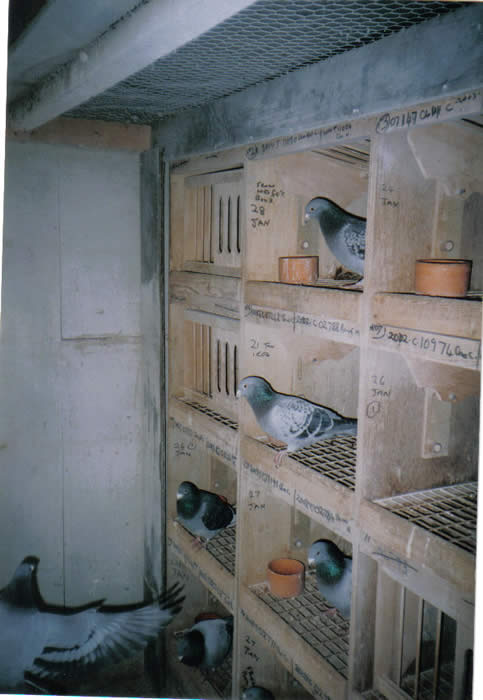
In the difficult Barcelona International race flown in late June 2007 Paul clocked one of his old reliable Southwells to win 13th Open BICC plus 1st Open Greater Distance Single Bird NFC to prove once again the incredible durability and tenacity of this old English strain. I include some photos with this article to demonstrate the quality of the stock housed.
The next article in this series will feature two more top class long distance lofts, that of Tony Leggatt of Havant and John and Spencer Nicholson of Rochester in Kent.
The Art of Breeding, Conditioning & Racing Pigeons For Long Distance Racing - Part 7
- Details
- Hits: 1983
Related Articles


Continue Reading
Continue Reading: more racing pigeon articles from the Elimar archive